
Dark spots and pigmentation: understand them and treat them for good
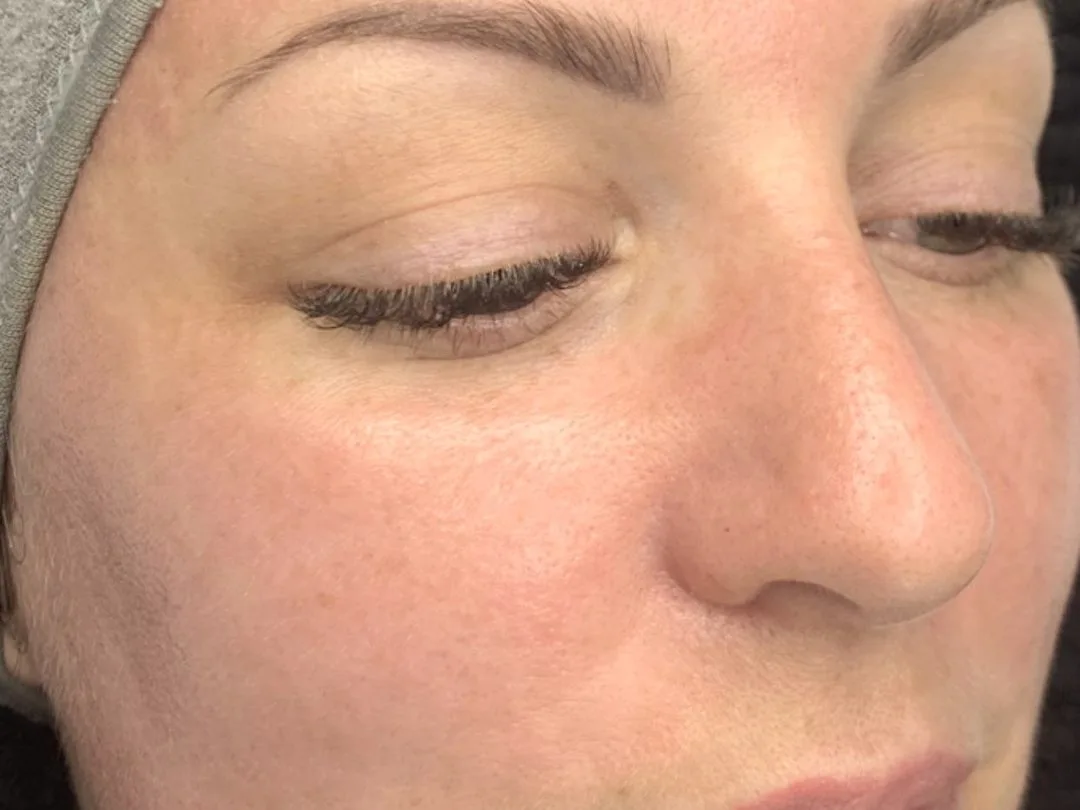 Sun, hormones or pimple?
 Key takeaways
- Spots have different origins: sun, hormones (melasma) or post-inflammatory.
- Lightening creams slow melanin at the surface but don't remove pigment that is already deposited.
- LaseMD targets pigment deep down; allow 2 to 3 sessions for sun spots.
- Without daily sun protection, no spot stays erased.
Dark spots are among the most common reasons for a consultation — and among the most poorly treated, because the symptom is often tackled without understanding the cause. Yet the treatment depends entirely on that cause.
Where do your spots come from?
| Type | Origin | Typical appearance |
|---|---|---|
| Lentigines | Sun, age | Well-defined spots, backs of the hands, face |
| Melasma | Hormones, heat | Diffuse patches, often symmetrical |
| Post-inflammatory | Spot, injury | Localised mark after a lesion |
Telling a solar lentigo from melasma changes everything: the latter is hormonal, more unpredictable and easily reactivated. That's why we always start with a diagnosis.
Why lightening creams disappoint
They slow down melanin production in the epidermis, but don't remove pigment already accumulated deeper down. Hence the "it lightens a bit, then comes back as soon as I stop" effect. They're useful for maintenance, not as an in-depth treatment.
LaseMD: targeting pigment at the source
The LaseMD laser (1927 nm) breaks up melanin deep down and restarts skin renewal that eliminates spots naturally, while improving overall radiance. For mild to moderate sun spots, 2 to 3 sessions 4 to 6 weeks apart are generally planned.
An absolute rule: without daily sun protection, no spot stays erased. SPF isn't an option, it's part of the treatment.
The (non-negotiable) role of sun protection
The sun is both the main cause of spots and the leading factor in relapse. A daily SPF 50, even in winter and even on cloudy days, determines how long the results last. With melasma, it's even more decisive.
When to treat?
Autumn and winter are ideal: periods of strong sun exposure are avoided, as a fresh tan is a contraindication. The protocol is planned so you reach spring with an even complexion.
Frequently asked questions
Is melasma treated like a sun spot?
No — melasma is hormonal and more unpredictable. The intensity is adapted and protection is emphasised. The diagnosis is essential.
How many sessions for sun spots?
Often 2 to 3, with a result that refines over the following weeks.
Can it be done in summer?
Periods of strong exposure are avoided: a fresh tan is a contraindication. Autumn and winter are ideal.
Can spots come back?
Yes, especially without sun protection or with melasma. Maintenance and a good SPF greatly limit relapses.
Is the treatment suitable for dark skin?
With a prior assessment and adapted settings, yes. Caution is needed to avoid any pigment reaction.
Is there downtime after a session?
Redness for 24 to 48 h and possible fine flaking; make-up can be worn again from day 2 or 3.